
Untangled Roots
Past Forward
Joseph and Elizabeth's
Wilderness
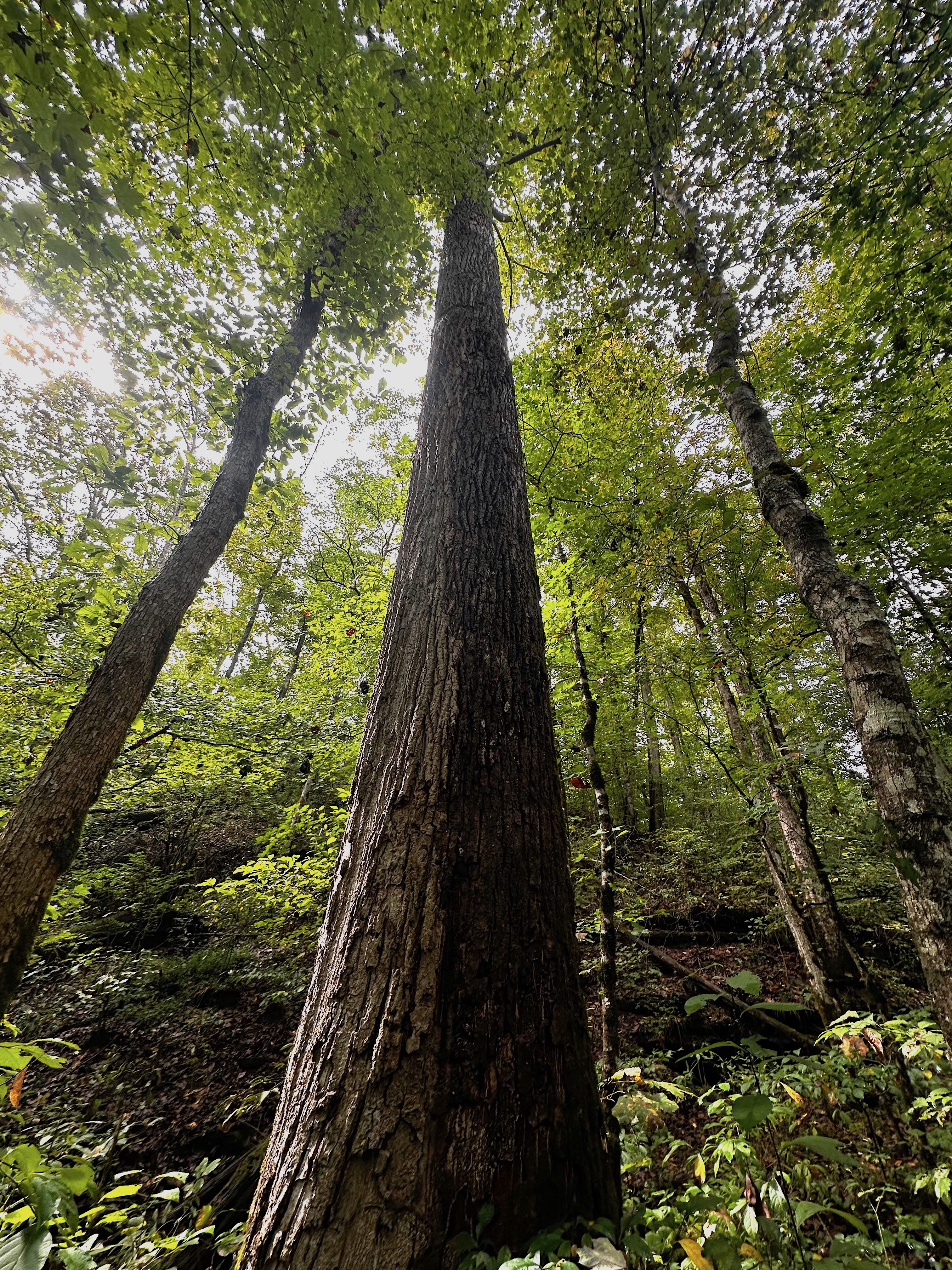
In 1809, my sixth great-grandmother, Elizabeth Calloway Daniel, stood on a ridge above the Elk River in what would not become Moore County for over a half century. Her husband, Joseph Job Daniel, had fought in the Revolutionary War as a young militiaman before leading his family west through the Cumberland Gap and across the plateau — known as Cumberland Mountain in those days. They were looking for land that had not yet been claimed in the new state of Tennessee — land that a veteran of the Revolution might build a life on. What they found was wilderness.
An unbroken canopy of hardwood forest. Tulip poplars a hundred feet tall. And growing in the deepest shade of the hollows, in soil that had never been turned by anything sharper than a box turtle's claw, was American ginseng. Panax quinquefolius. The Cherokee had taught the early settlers its value, and Elizabeth's people were already digging and trading the root before they had finished building their first cabin.
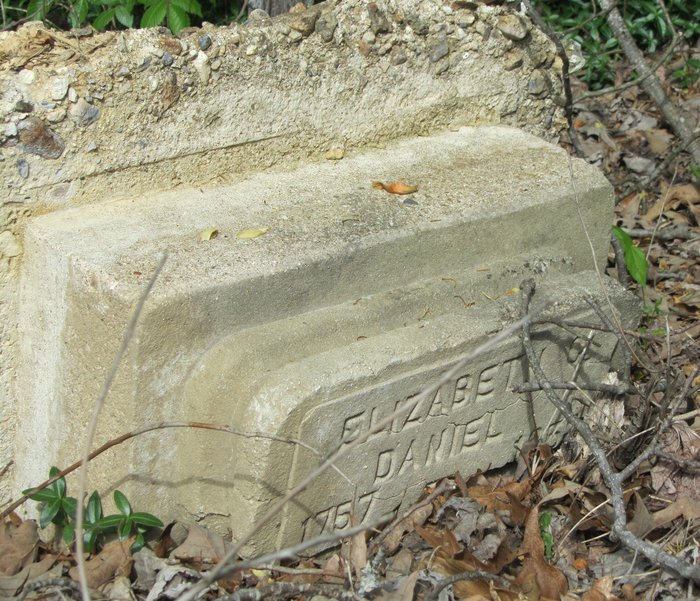
Elizabeth Calloway Daniel — Ridgeville Cemetery, Moore County
The Scale of Extraction
While Elizabeth's family cleared the land, the ginseng trade was stripping the forest floor across Appalachia. These newspaper advertisements — published in the years surrounding her arrival — reveal the staggering scale of harvest.
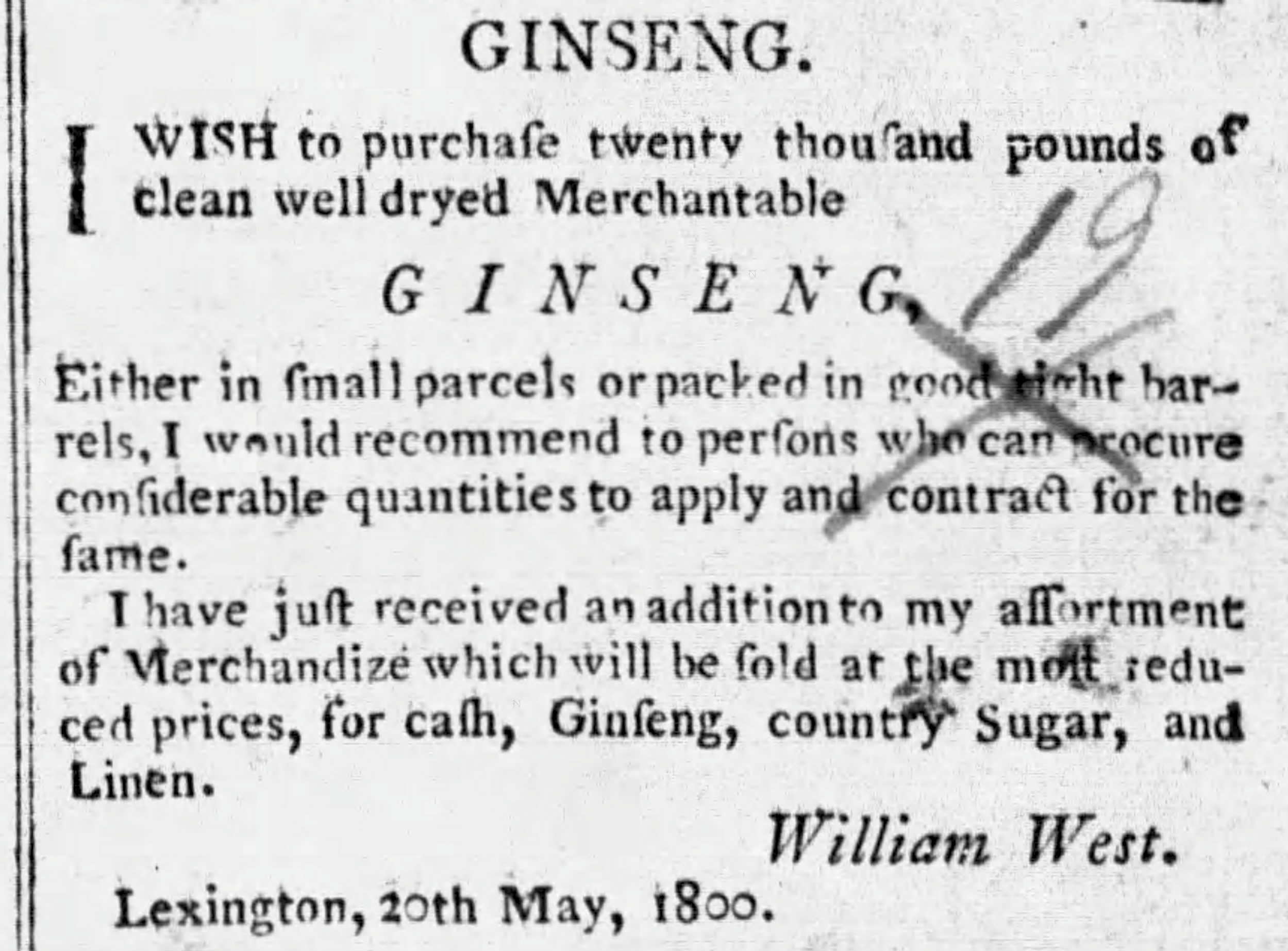
20,000 lbs
Kentucky Gazette, Lexington, 1800
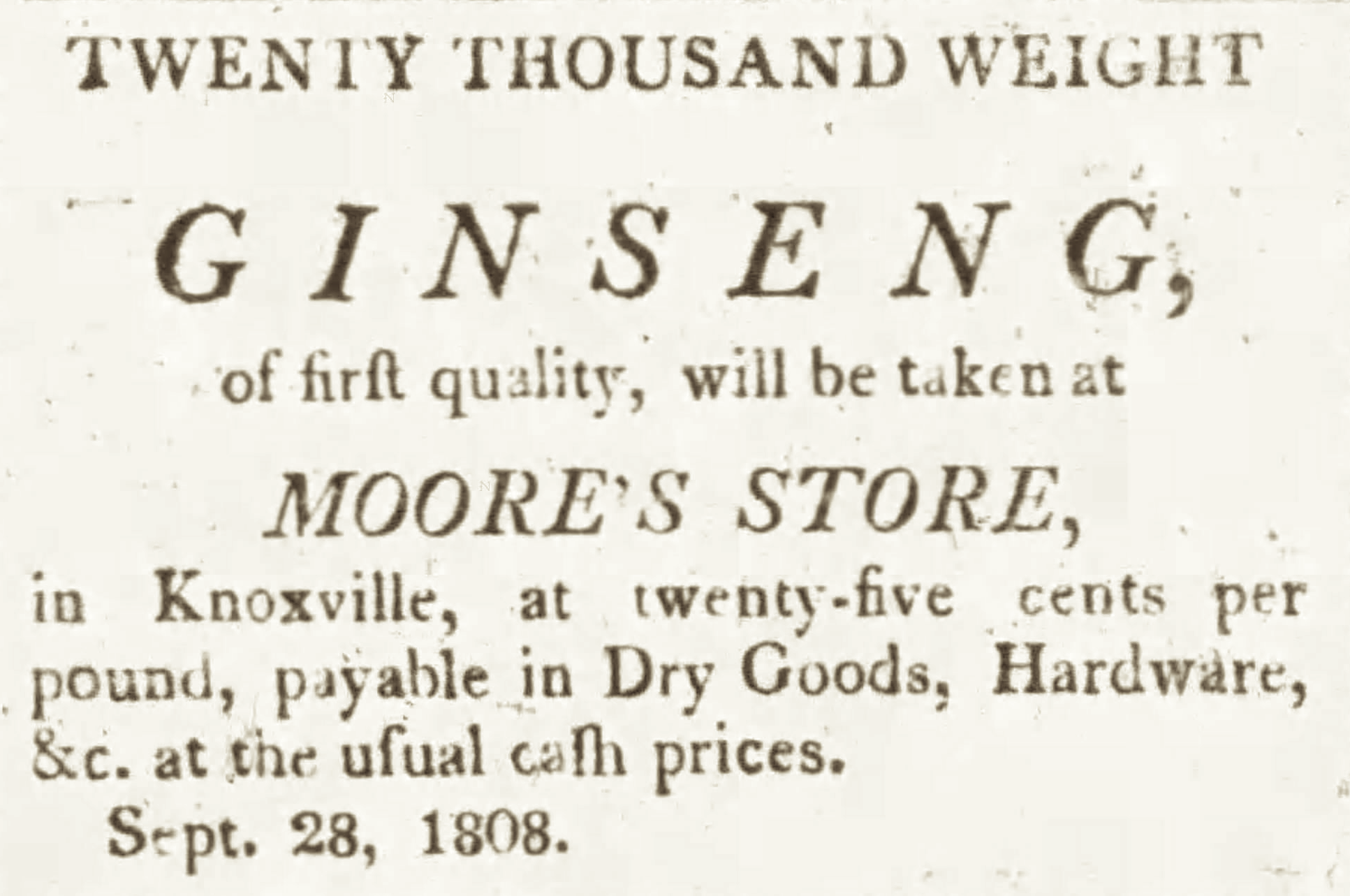
20,000 lbs
Knoxville Gazette, 1808
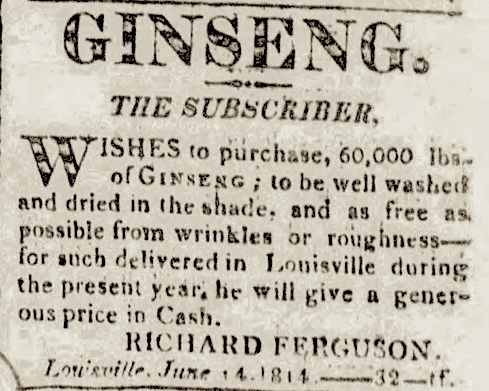
60,000 lbs
Western Courier, Louisville, 1814

10,000 lbs
Richmond Enquirer, 1820
Over one hundred thousand pounds of ginseng sought in four advertisements alone — across a region where Elizabeth's family was clearing the very forests these roots were dug from.
Before the Lake
Six generations after Elizabeth, my family was still on Hurricane Creek. The bloodline runs through their daughter Annie Daniel Sanders, through Annie's daughter Nancy, through the Neal family who farmed these same ridges into the twentieth century, and down to me. Today you can drive across Sanders Causeway or cross Neal Bridge — the family names still written on the landscape in concrete and steel.
In 1970, TVA completed Tims Ford Dam, impounding 10,700 acres across Franklin and Moore counties. The bottomlands Elizabeth's children had cleared were swallowed by the lake. The hillsides were left to grow back.
The forest returned. The ginseng did not.
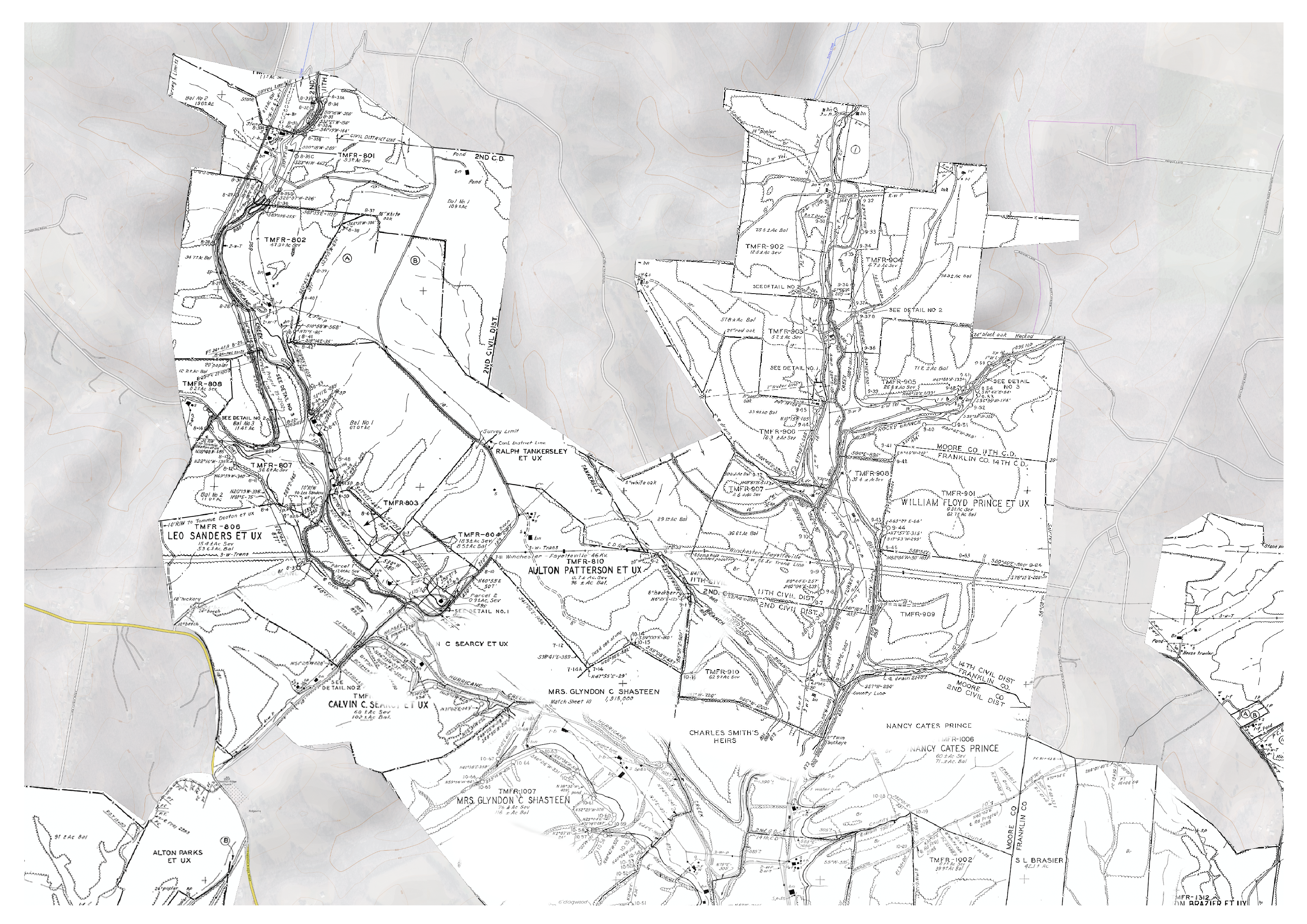
TVA acquisition parcels along Hurricane Creek, stitched from original records. These are the tracts taken from families — including Elizabeth's descendants — before the valley was flooded.
The Shifting Landscape
Drag the slider to reveal what 88 years have changed along Hurricane Creek. The 1938 aerial shows cleared farmland, bare hillsides, and a narrow Elk River. Today's satellite shows a lake where the bottomland was — and forest where the fields once stood.
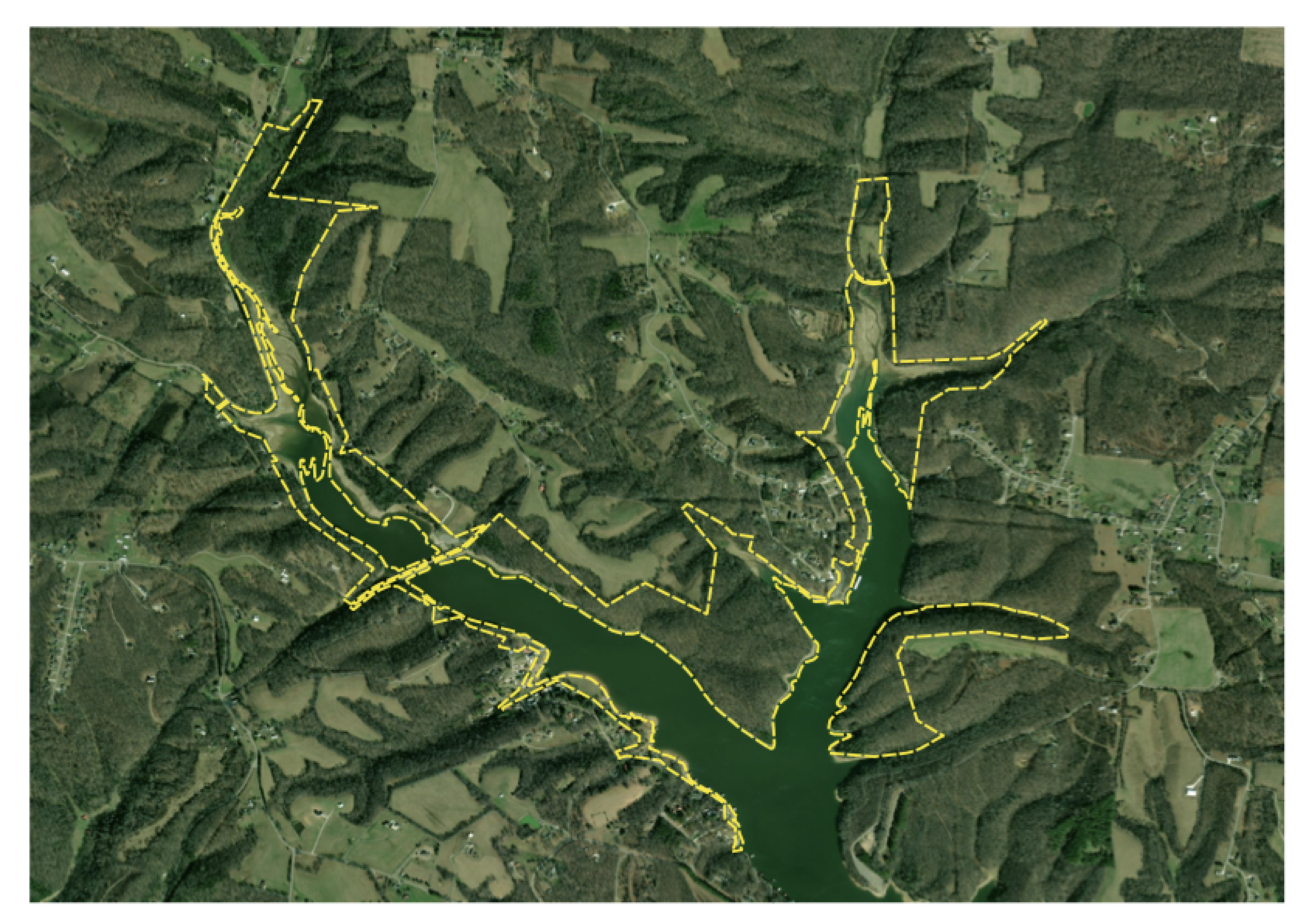
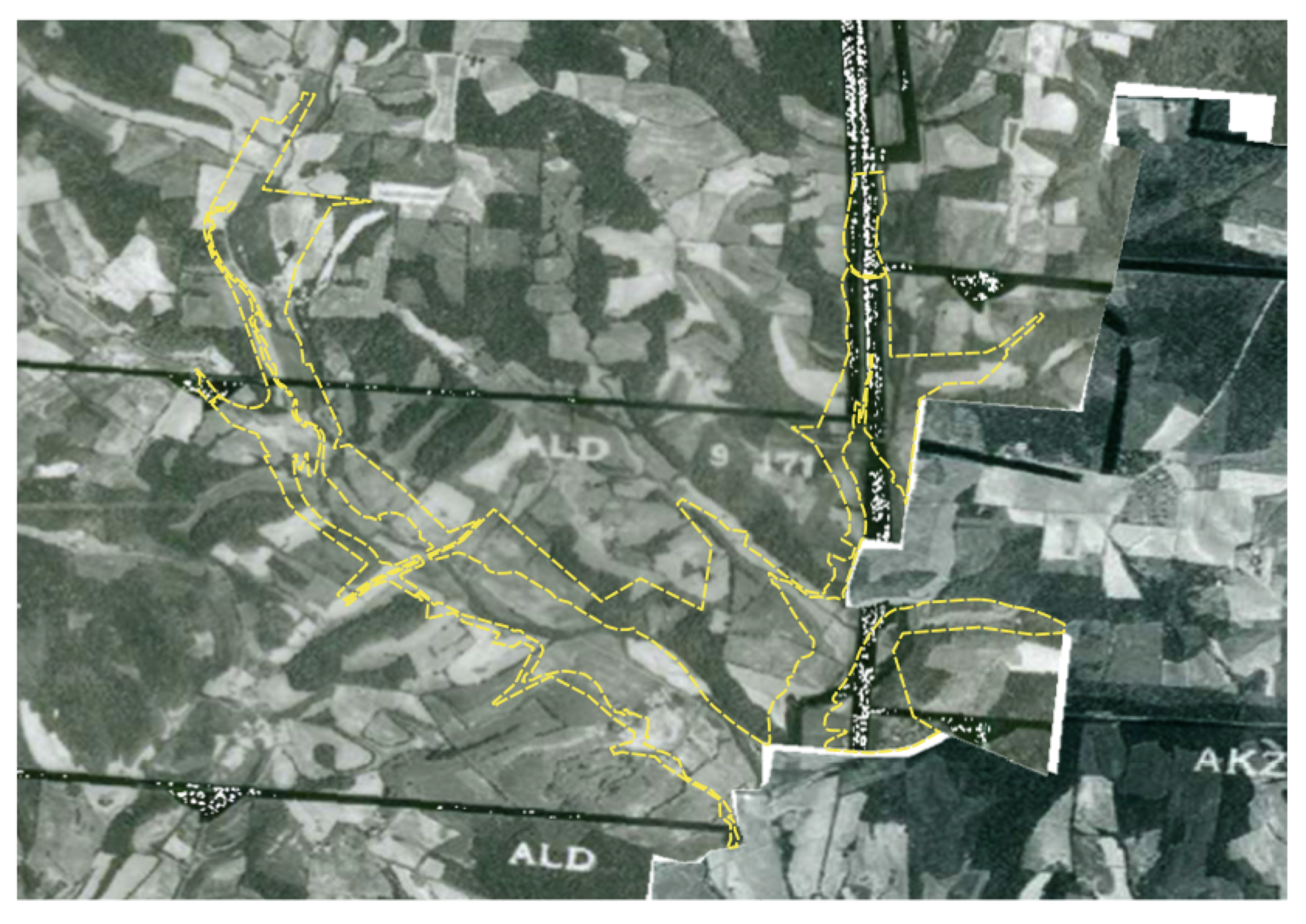
The yellow dotted line represents the 500+ acres TVA manages around Hurricane and Turkey Creeks.
The Ginseng Gap
As both a descendant of Elizabeth Calloway Daniel and an environmental scientist trained in historical ecology, I wanted to understand why the ginseng has not returned to these recovering forests. The canopy is there. The slopes are right. The elevation and rainfall match the upstream ravines where ginseng still thrives. So what is missing?
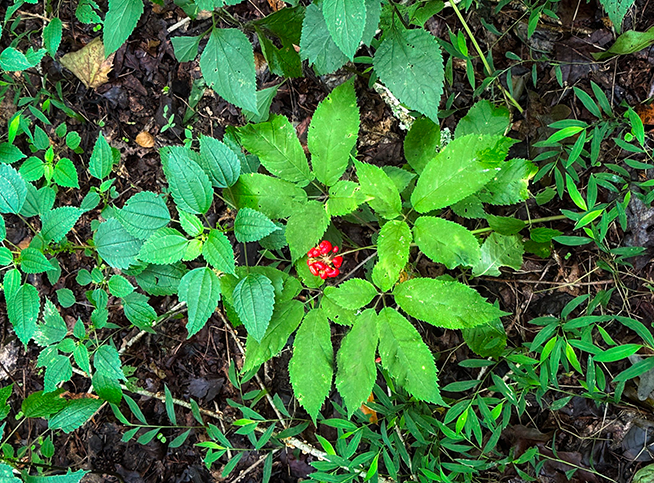
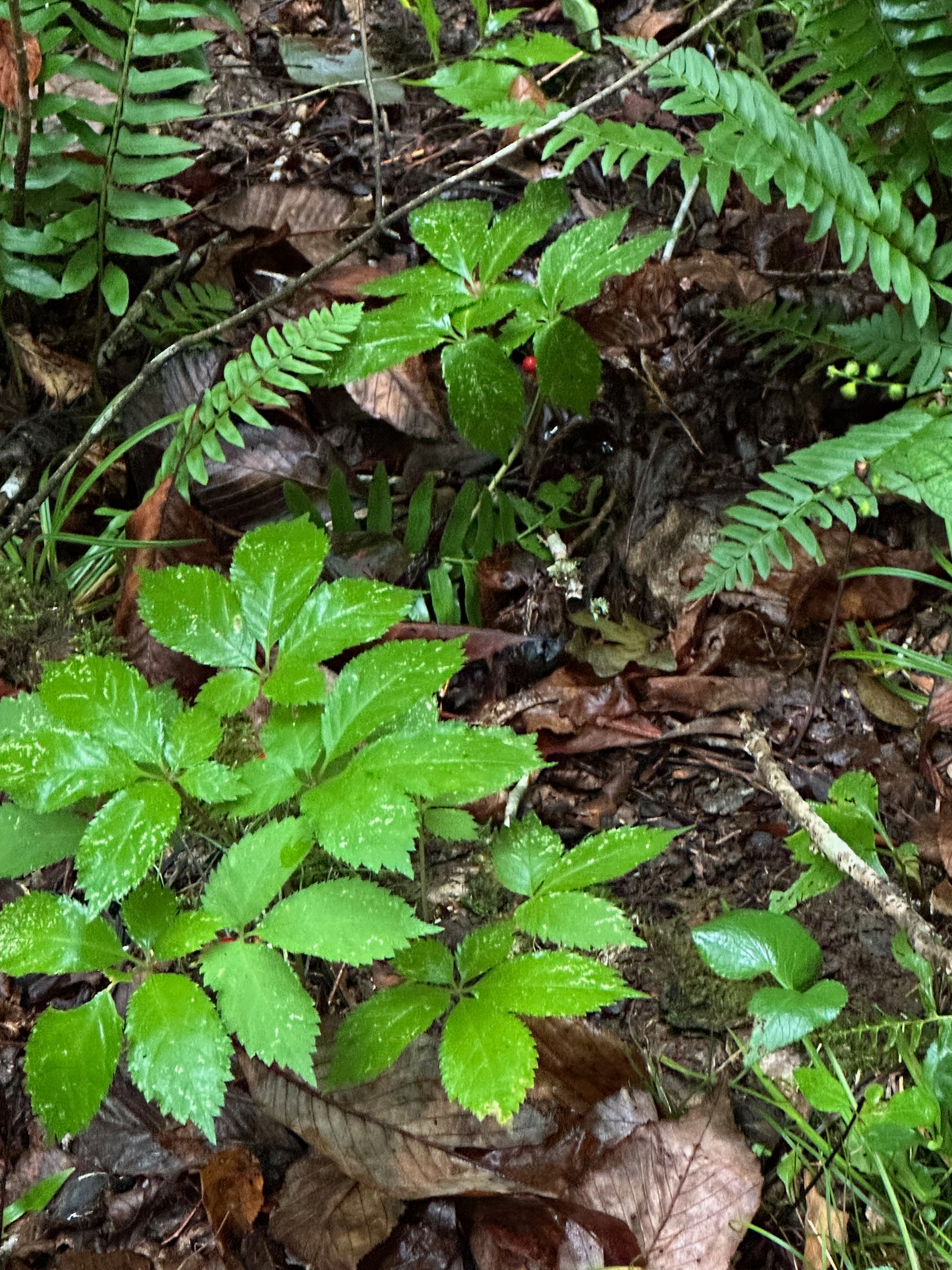
I mapped 174 georeferenced ginseng occurrence points against the TVA parcel boundaries. The pattern is stark. Within a 562-acre TVA parcel that has been regrowing forest for over half a century, I found exactly two ginseng plants. Within three miles upstream, where the slopes were too steep to farm: 104.
The same pattern repeats at the neighboring parcel: two plants inside, 124 upstream. The ratio — 60:1. The forest has recovered its canopy. What has not recovered is the invisible infrastructure beneath the soil.
What the Soil
Remembers
American ginseng is a mycorrhizal obligate — it cannot survive without a symbiotic partnership with specific soil fungi that colonize its roots and extend its reach into the forest floor (Bi et al., 2003; Xing et al., 2019). These fungal networks are the product of centuries of unbroken forest continuity.
When the land was plowed, those networks were severed. The trees came back in 55 years. But research on European forests recovering from disturbance has shown that even after 107 to 148 years, mycorrhizal species composition had not fully returned to undisturbed conditions (Derén et al., 2024). The ginseng is still waiting, just upstream, in the ravines too steep for a mule and a turning plow.
A Map for Restoration
Drag to reveal what the satellite can't show you. Beneath the recovered canopy, our Habitat Suitability Model identifies where slope, aspect, elevation, and forest cover align for ginseng restoration.
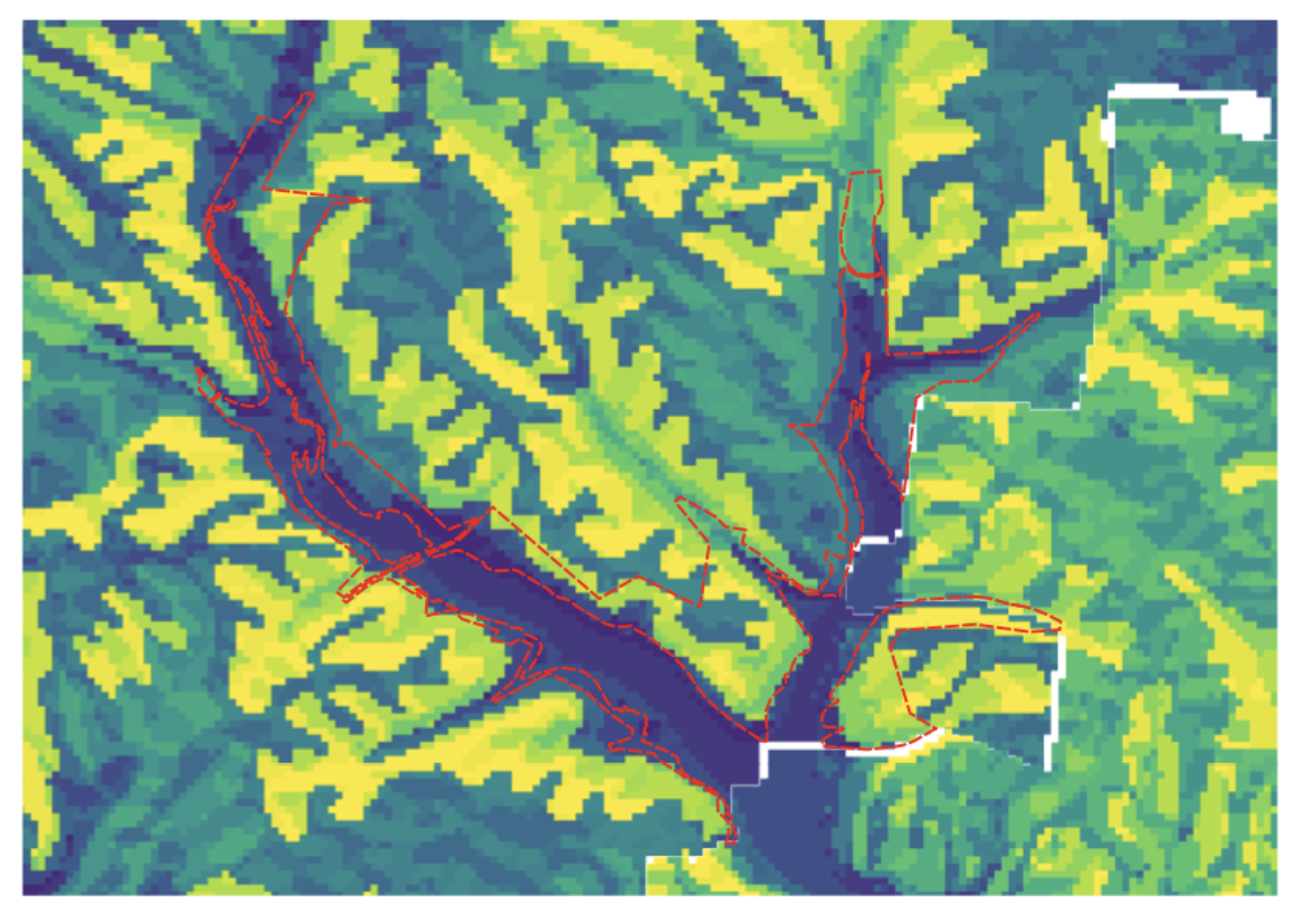
Unsuitable — lacks key habitat criteria
Low — 1–2 criteria met
Suitable — most criteria met
Highly suitable — prime restoration habitat
Beyond Hurricane Creek
Restoration on federal land alone is not enough. Upstream along Hurricane Creek and Turkey Creek, where the healthiest wild populations persist, private forestland is being cleared for residential development and a 3,000-acre solar installation at the headwaters. The surviving ginseng populations are being squeezed from both ends — ecologically empty TVA land below, and vanishing habitat above.
This is where wild-simulated ginseng cultivation offers a powerful answer. Wild-simulated cultivation is the practice of planting ginseng seed into a natural forest environment and letting it grow with minimal intervention — no tilling, no fertilizers, no artificial shade. The forest does the work. Seven to twelve years later, the roots command prices of $300 to $700 per dried pound. For forest landowners, every acre planted in wild-simulated ginseng is an acre that will not be cleared for a house lot or a hay field.
On TVA land, we are proposing a pilot restoration program using seed from the upstream Hurricane Creek populations. On private land, a forest farming initiative that teaches landowners to cultivate ginseng in their existing woodlots — providing income while preserving the canopy, the mycorrhizal networks, and the watershed integrity that a hundred understory species depend on. The two efforts reinforce each other: restoration creates a genetic reservoir; forest farming creates an economic buffer against development pressure.
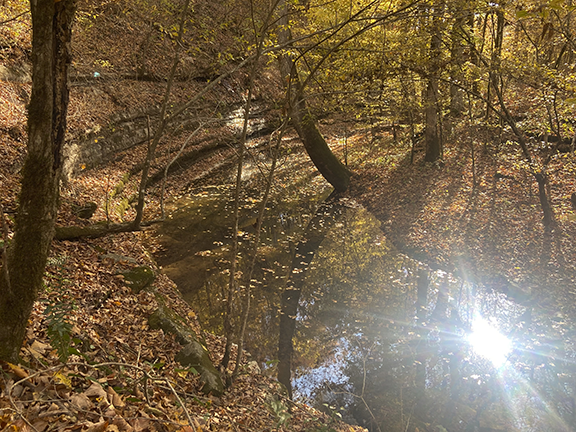
When TVA took this land, it inherited a landscape shaped by two centuries of agriculture. The forest has done its part — it has come back. Now it is our turn to bring back what the forest alone cannot restore.

A Partnership for
the Next Century
The data is clear. The land is ready. The upstream populations along Hurricane Creek are healthy and genetically adapted to this landscape. They represent a natural seed source that could repopulate these parcels through careful, science-guided restoration.
“Neither Joseph nor Elizabeth could have imagined that their family's clearing of Hurricane Creek would still echo in the ecology of these ridges two hundred and seventeen years later. They came to this land because it was whole. I am trying to make it whole again.”